
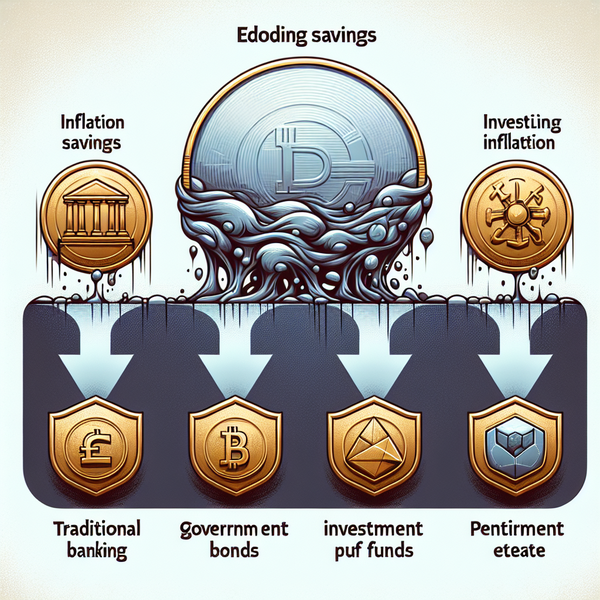
Title: Outsmart Inflation Today: Five Simple Moves To Defend Your Savings
Meta Description: Learn how to protect savings from inflation with smart inflation hedges, TIPS investing, and high-yield accounts so your cash earns real returns and you protect wealth from inflation.
Protect Savings From Inflation: How Rising Prices Shrink Cash And 5 Ways To Fight Back
Imagine stacking money in a shoebox for a rainy day. A year later you open it and find the same number of bills. Looks safe, right? Not really. Prices went up while your cash stood still. That gap is the quiet tax that steals buying power. If you want to protect savings from inflation, you need a plan that grows faster than rising prices.
In this guide we will unpack how inflation eats your money, what real returns actually mean, and which tools work as inflation hedges. You will see how TIPS investing functions in plain language, how to use high-yield accounts without falling for teaser rates, and how to protect wealth from inflation with a simple, step by step playbook. Let us get your money moving in the right direction.
Why Rising Prices Beat Cash Even When Your Balance Climbs
Inflation does not need a crash to hurt you. It just needs time. When a cart of groceries costs 3 percent more each year, your dollars buy less. If your savings earn 2 percent but prices rise 3 percent, your real returns are negative 1 percent. The number in your account is higher, but your buying power is lower.
Here is the part many people miss: taxes hit nominal returns, not real returns. If your savings account pays 4 percent and your tax rate is 22 percent, you keep about 3.12 percent before inflation. Subtract 3 percent inflation and your real return is near zero. After a few years, that slow leak becomes a puddle.
So the goal is simple to say and hard to do: beat inflation after tax, with risk you can live with. That is where smart tools, consistent habits, and a bit of math come in.
Smart Inflation Hedges With A Focus On Real Returns
TIPS Investing Explained In Plain Words
When you hear TIPS investing, think Treasury Inflation Protected Securities. They are bonds from the U.S. Treasury that adjust their principal with inflation. Here is how they work in real life:
Say you buy a TIPS with a 1 percent real yield. If inflation runs 3 percent next year, your total return is about 4 percent, because the principal steps up with the Consumer Price Index. That adjustment is the superpower. TIPS aim to protect purchasing power, not just grow the dollar figure.
Key points to keep it simple:
- Real yield matters most. A higher real yield means more return above inflation.
- Breakeven is your guide. Compare the yield on a regular Treasury to a TIPS of the same maturity. The gap is the market implied inflation rate. If you expect higher inflation than that gap, TIPS often win. If you expect lower, nominal Treasuries can win.
- Funds vs individual bonds. A TIPS fund or ETF gives easy access and diversification. An individual TIPS held to maturity will pay out inflation adjusted principal and remove price worries at the end date. Choose based on how much tinkering you like.
- Taxes count. In taxable accounts, you pay tax on the inflation adjustment each year, even though you do not get that as cash until you sell or mature. Many investors prefer TIPS in tax deferred accounts like IRAs for this reason.
- Maturity ladders help. Stagger TIPS across years so you always have some bonds nearing maturity. That smooths interest rate swings and lines up cash needs.
Small example: You plan to buy a car in five years and do not want inflation to hijack the price. You can build a five year TIPS ladder to mature when you need the money. That setup aims to keep the car budget in todays dollars, not tomorrows inflated dollars.
Common slip ups to avoid:
- Chasing last years winner. Buying TIPS only after a hot inflation headline can lead to poor timing. Build a steady position instead.
- Ignoring breakeven math. Without that check, you are flying blind.
- Forgetting taxes and account type. Put TIPS where they fit your tax picture.
High-Yield Accounts, Treasury Bills, And Cash Tactics That Actually Help
Cash is not the enemy. Idle cash is. The goal is to make every idle dollar earn more with low risk. Here is how to use high-yield accounts and close cousins to lift returns without drama.
Better homes for cash:
- High-yield savings accounts. Online banks often pay far more than big branch banks. Check for no monthly fees, fast transfers, and a track record of following the Fed when rates move.
- Money market funds. These funds invest in short term, high quality assets and often track short term rates closely. They are popular for brokerage cash.
- Treasury bills (T-bills). Terms of 4 to 52 weeks, state tax free interest, and you can buy them via TreasuryDirect or your broker. T-bills are great for sinking funds and emergency buffers.
- Short term CDs. Look for competitive rates and minimal early withdrawal penalties. Brokered CDs are easy to buy and sell, but watch call features.
Practical moves:
- Divide your emergency fund. Keep one month of expenses in a checking account for quick access. Put the rest in a high-yield savings account or T-bills to earn more.
- Shop around each quarter. Banks adjust slowly at times. A 10 minute rate check can pay real money over a year.
- Skip teaser traps. A temporary promo rate that drops in two months is not a win if you forget to move the money.
- Automate the upgrade. Set calendar reminders to review rates. If your bank falls behind, move.
Note on risk: These are still cash like. But they do not beat high inflation on their own for long. They buy time while you plan longer term steps.
Real Assets, Stocks, And Practical Inflation Hedges Beyond Bonds
Inflation hedges do not live only in bonds. A mix of assets can help you protect wealth from inflation while still growing over the long haul. Keep the focus on real returns.
Ideas that have helped many investors over time:
- Stocks with pricing power. Companies that can raise prices without losing customers often hold margins when costs rise. Think steady demand and strong brands. Broad index funds already include many of these.
- Dividend growers. Firms that raise dividends year after year often have durable cash flow. Rising income can offset higher prices in daily life.
- Real estate. Rents tend to adjust with inflation. You can get exposure through REITs in a fund or ETF. They bring liquidity and diversification, but still bounce with rates.
- Commodities and gold. Not a complete plan, but small slices can help during spikes in inflation or geopolitical stress. Use low cost, broad funds if you add them at all.
- International diversification. Inflation and currency cycles vary across regions. Global exposure can soften local shocks.
Tips to keep your edge:
- Blend offense and defense. Own assets that can outrun inflation over decades, not just months. Stocks do the heavy lifting in most plans.
- Use low fees. Fees cut directly into real returns. Favor index funds and simple ETFs where they fit.
- Match assets to goals. Short term goals need stable money. Long term goals can handle more swings to aim for higher growth.
Common mistakes to avoid:
- All eggs in one hedge. Betting only on one hedge, like gold or a single sector, can hurt when that hedge lags.
- Mixing time horizons. Using a five year bond for a bill due next year creates timing risk.
- Ignoring behavior. A great plan that you cannot stick with is not a great plan. Pick a risk level you can live with during rough weeks.
Step By Step Playbook To Protect Wealth From Inflation Now
Here is a practical, no fluff checklist. Take it one step at a time. You do not need to do all steps in one day.
- Map your money buckets.
Break savings into three buckets:
- 0 to 12 months: emergencies and planned bills.
- 1 to 5 years: near term goals like a car or home project.
- 5 years plus: long term growth like retirement or college. - Upgrade your cash yield.
Move idle cash to high-yield accounts, money market funds, or T-bills. Aim to earn near current short term rates. Recheck quarterly. - Stabilize your near term goals.
Use a mix of T-bills, short CDs, and a small slice of short TIPS for goals due in 1 to 5 years. That blend seeks to keep up with inflation while keeping swings modest. - Add TIPS investing for core inflation defense.
Consider a TIPS ETF for simplicity, or build a ladder of individual TIPS inside an IRA if you want to remove tax drag. Focus on real yield and the breakeven check. - Grow long term with a diversified stock core.
Use low cost index funds across U.S. and international markets. Add a tilt to dividend growers if that helps you stay calm during dips. - Season with selective inflation hedges.
If you want extra ballast, add small slices of real estate and commodities funds. Keep each slice modest. Review once or twice per year. - Automate contributions and rebalancing.
Set automatic transfers so money flows into the plan every payday. Rebalance on a schedule, not based on headlines. That buys more when prices are down and trims when prices run hot. - Lower your personal inflation rate.
You cannot control CPI, but you can beat lifestyle creep:
- Refinance high rate debt when math makes sense.
- Shop insurance yearly.
- Buy energy efficient gear that cuts bills.
- Cook more at home when takeout prices jump. - Mind taxes to protect real returns.
Place tax heavy assets in tax deferred accounts when possible. Use municipal bonds for taxable income if they fit your bracket. Harvest losses in taxable accounts to offset gains if needed. - Keep records and review yearly.
Track your blended after tax return versus inflation. If you are lagging by more than 1 percent for two years, adjust your mix.
Bonus move for savers who want a set and forget anchor: Build a core of TIPS plus a broad stock index fund. Rebalance yearly. That pair targets growth and inflation defense without daily attention.
How Inflation Quietly Attacks Your Plan And What To Do About It
Let us get more concrete. Here are the sneaky ways inflation messes with your savings, plus fixes you can apply this week.
- Emergency funds lose punch.
Fix: Keep only one month in checking. Move the rest to a high-yield account or T-bills. Set alerts to chase better rates. - Goal budgets drift upward.
Fix: Price your goal in todays dollars and invest with TIPS for the time frame. That helps lock the budget in real terms. - Taxes hit nominal, not real.
Fix: Place TIPS in tax deferred accounts when possible. Use state tax free Treasuries in taxable accounts. - Cash drag in broker accounts.
Fix: Swap sweep cash for a money market fund with a higher yield. Just check purchase and redemption cutoffs. - Rate teasers lure, then drop.
Fix: Keep a short list of backup banks. If a rate drops out of line, move funds the same week. - Chasing headlines leads to whiplash.
Fix: Write a simple policy. For example: 60 percent global stocks, 30 percent high quality bonds, 10 percent inflation hedges. Rebalance yearly.
Putting The Math On Your Side With Real Returns
Your money life gets easier when you think in real returns. Ask this one question for every choice: After tax, will this likely beat inflation over my time frame?
Use this quick lens:
- Cash within a year: Aim for the best rate with FDIC or Treasury backing. Accept that real returns may be near zero during high inflation. Safety matters more.
- One to five years: Blend T-bills, short bonds, and some TIPS. Match maturities to your deadlines.
- Five plus years: Focus on growth engines like broad stocks, with added inflation hedges for balance. Expect bumps. Let compounding do its work.
Small example of compounding in real terms: If inflation averages 3 percent and your total portfolio returns 6 percent, your real return is about 3 percent. Over 20 years, 100 dollars at 3 percent real growth becomes about 181 dollars in todays purchasing power. That is how you protect wealth from inflation without losing sleep.
Simple Tools That Make Protecting Savings Easier
You do not need fancy software. A few low cost tools can boost your odds:
- Rate trackers. Use bank comparison sites monthly to spot better high-yield accounts or CDs.
- Broker features. Auto roll for T-bills, dividend reinvestment, and monthly investment plans. Less friction means more consistency.
- Budget apps. Tag spending categories that inflate fast, like food, fuel, and travel. Trim where it hurts least.
- Rebalance reminders. Calendar alerts every six months. If any slice drifts more than 5 percentage points off target, rebalance.
Keep it boring. Boring wins. The headline grabbing trade rarely beats a steady, rules based plan that keeps real returns above zero.
Your Money Can Keep Pace If You Act Early
Inflation is not an instant disaster. It is a slow leak. The fix is to seal the leak now with the right mix of tools. Boost your cash yield, use TIPS investing for direct inflation defense, lean on diversified stocks for long term growth, and add measured inflation hedges where they fit. Watch taxes so your real returns stay positive. Then automate as much as you can.
Take one action today. Open a better high-yield account. Buy your first T-bill. Read the real yield on a TIPS fund. Each step adds up. Protect savings from inflation and you protect your future choices. That is the real win.