
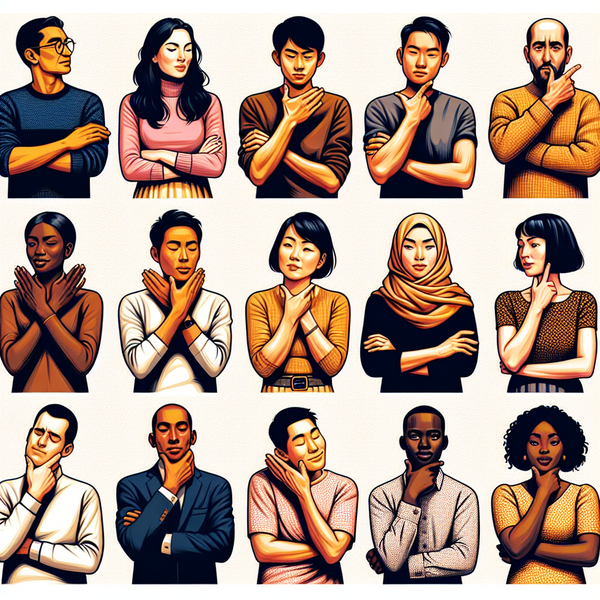
The Body Language Mistakes Behind Crossed Arms: Social Signals Explained
You spot a teammate with arms crossed in a meeting and think, Uh oh, defensive. Or you notice a date leaning back with a tight smile and your mind jumps to they are not interested. These snap reads are common body language mistakes, and they get in the way of clear talk. When you learn to read nonverbal cues with a calmer eye, you make better calls, build trust, and skip a lot of awkward moments. In this guide, you will see social signals explained with a focus on one move that many people misread. You will also get simple steps to improve nonverbal communication right away.
How to read nonverbal cues without misread social cues
The body language move most people misread is crossed arms. The pose looks closed, so our brains label it as closed mind. That can be true at times. But crossed arms also show up when a room is cold, when someone is deep in thought, when they need a little self comfort, or when the chair lacks arm rests. In short, the move has many meanings. If you treat it as one loud signal, you risk misread social cues and make choices that hurt connection.
Think of body language like a sentence, not a single word. Context is the grammar. Clusters are the extra words that change tone. Baseline is the speaker style. Once you add those three pieces, social signals become clearer. Only then do you decide what the move really says.
Steps to improve nonverbal communication in daily life
Let us break it down in a way that you can use by lunch today. First, we will look at why crossed arms show up. Then we will map the traps that cause fast wrong reads. Last, you will get a set of quick checks and phrases that make your read smarter and kinder.
Overview of the main topic
Body language is a blend of habit, comfort, culture, and mood. One pose can say five different things across different scenes. When you understand this, you stop guessing and start noticing. Crossed arms will be our anchor because it is common and easy to spot. Along the way, you will learn a process you can reuse with eye contact, posture, and touch as well.
Specific Aspect 1: Why crossed arms happen more than you think
Here are the most frequent drivers for crossed arms. You will see that none of these are about you, which is a helpful reminder.
- Warmth and comfort: Arms trap heat. In a cold office, crossed arms help the body feel steady.
- Self soothing: The slight pressure across the upper arms calms the nervous system. Some people do this without any thought when stress rises, even mild stress like focus or number crunching.
- Posture support: Long meetings, no arm rests, or a soft couch make the pose feel stable. Folks with back or shoulder pain use it to ease strain.
- Habit and style: Some people learned to stand this way in school halls or on noisy factory floors. It turned into a neutral habit over years.
- Thinking mode: Many people cross arms when they are sifting ideas. Watch the face and eyes. A relaxed brow and still mouth often mean deep thought, not pushback.
Example: You pitch a new plan. Your manager crosses arms and looks down. You panic. Two minutes later they ask three sharp, fair questions and then nod yes. Was the pose hostile? In this case, no. It was a thinking posture plus a little self comfort while they weighed risk.
Secondary cues to check during this pose:
- Face: Is the jaw tight or soft? Are the eyebrows pinched or neutral?
- Shoulders: Hunched high with tension or loose and level?
- Feet: Pointed toward you or angled to the door?
- Timing: Did the arms cross right after a cold draft or right after a point that stung?
Specific Aspect 2: How misreading happens and what to do instead
We misread body language for three main reasons. If you learn the fixes, you will cut errors fast.
- Projection: We assume their pose reflects our fear. If you worry they hate your idea, you view any closed pose as proof. Fix: Pause and scan for clusters before you judge. One cue is never enough to call it.
- Context blind spots: We forget room temp, seating, time pressure, and past culture. Fix: Ask yourself, What else could explain this? Name three options. This quick game slows the rush to blame.
- Baseline gaps: We read a new person through our own habits. Fix: Build a baseline. Spend a week noticing how they sit, stand, and think when neutral. Compare later shifts to that neutral baseline.
Action steps you can use today to read nonverbal cues with more accuracy:
1) Use the Cluster Rule. Do not trust one cue. Look for three signals in the same lane: arm posture, facial tension, and foot direction, for example.
2) Check the Before and After. What happened just before the pose appeared? What changed after a warm joke, a glass of water, or a room temp tweak? Shifts after small changes tell you a lot.
3) Match the Message. If the words are positive but the body seems closed, ask one gentle check question. Try, Would it help if we slowed down or looked at a different option? Then watch for the body to open.
4) Consider culture and neurotype. In some cultures, still posture shows respect. Some people with sensory needs use pressure for calm. That makes crossed arms a comfort tool, not a wall.
Example: A client keeps arms folded and leans back, but their feet point at you and their questions are curious. Cluster says engaged, not hostile. You keep the talk going and close the deal without pushing for a pose change.
Specific Aspect 3: What crossed arms really mean across common scenes
Work meeting:
- Likely meanings: Thinking, note taking in their head, cold air vent above, mild stress.
- Watch for: Tight lips, squint, feet aimed at the exit. Those hint at true disagreement.
- Tip: Offer a break, close a vent, or invite a short summary. Try, What stands out to you so far? This invites words that match or correct the pose.
Sales or client call:
- Likely meanings: Decision load, price shock, or comfort habit.
- Watch for: Sudden arm cross right after a price reveal. That spike suggests a concern you can handle.
- Tip: Use a soft label. Sounds like the timeline or budget needs a tweak. Then pause. If arms ease, you are on the right track.
First date or social event:
- Likely meanings: Nerves, room temp, or shy style.
- Watch for: Eye warmth and laugh timing. If both are present, interest is likely.
- Tip: Change context. Suggest a short walk or a new seat away from the draft. If the pose opens, it was comfort, not disinterest.
Public speaking or training:
- Likely meanings: Audience regulation. Arms crossed help listeners focus.
- Watch for: Nods, note taking, and forward lean during key points. These beat arm posture.
- Tip: Ask a quick show of hands to reengage the room. Expect no mass shift in arm pose. Focus on energy in the eyes and faces.
These examples show the heart of social signals explained: a single move is never the full message. You need scene, cluster, and baseline to call it right. That is how you avoid body language mistakes and misread social cues in the moments that matter.
Application and practical tips you can use right now
Below is a small playbook to improve nonverbal communication. Keep it handy for meetings, interviews, sales calls, and first meets.
- Build baselines: For each person you work with, spend one week watching their neutral state. Where do their hands rest? How much eye contact do they hold? Note this so you can see real changes later.
- Scan in layers: First scan comfort cues like breath and shoulders. Then scan direction cues like feet and torso. Last, scan face and hands for emotion spikes.
- Use the 3 and 3 rule: Wait for 3 cues over 3 minutes before you label the mood. This stops you from jumping at the first sign.
- Adjust the scene: Before you confront, try easy fixes. Turn off a draft, offer water, shift to a chair with arm rests, or suggest a short stretch. If cues settle, you solved the real issue.
- Ask light check questions: Try, How are you feeling about this so far, on a scale of 1 to 5? Numbers feel safe and give quick clarity.
- Mirror with care: Mild mirroring builds rapport. But never copy a stress cue. Mirror the rhythm of speech or the pace of gestures instead.
- Mind your own signal: Keep your arms loose at your sides when you propose new ideas. Angle your feet toward the person. Keep your jaw soft. Your body grants permission for theirs to open too.
- Respect differences: Culture, pain, and neurodiversity shape comfort moves. If you do not know, ask with respect. What helps you feel most comfortable in meetings? Simple and direct wins.
- Practice with video: Record a mock pitch. Watch without sound first. Note what your body says. Then add sound and see what aligns or clashes. This speeds up your learning curve.
- Debrief key moments: After a tough talk, write three cues you saw, three you might have missed, and one thing you will do next time. This is how skills stick.
Common mistakes to avoid when reading crossed arms
- Treating the pose as a verdict: It is not a final answer. It is a clue that needs more clues.
- Ignoring the feet: Feet are honest. If they point at you, the person is still engaged.
- Confusing quiet with cold: Some people listen with minimal movement. Look for nods and breath, not big gestures.
- Forgetting the environment: Cold rooms, long days, bright lights, loud open offices. All these push people into closed postures. Solve the environment and the pose often melts away.
Level up your own nonverbal game
You can also use crossed arms on purpose in smart ways, but with care. If you need a moment to think, crossing your arms while looking up and pausing can signal reflection, not anger. To keep it neutral, relax your shoulders, keep your feet pointed at the person, and soften your mouth. This shows focus, not fight. When you share hard news, try a calm stance with open hands at waist height. That signals honesty and lowers tension across the room.
Use these simple upgrades to improve nonverbal communication during high stakes moments:
- Open triangle: Keep hands visible between waist and chest. It reads as safe and steady.
- Anchor stance: Feet hip width, knees soft, shoulders down. You look grounded without being rigid.
- Breath cues: Slow your inhale and extend your exhale. Others match your pace without even trying, which lowers group stress.
- Label and lead: If someone looks tense, you can say, This feels like a lot. Want to take a minute to think it through? You are not calling them out. You are calling them in.
Pulling it all together
Crossed arms might mean resistance. But more often they mean comfort or focus. The only way to know is to zoom out. Look for clusters. Read the room. Compare to baseline. Then confirm with a gentle question when stakes are high. This short process turns vague poses into useful data. It helps you avoid body language mistakes and gives you a steady way to read nonverbal cues with care.
The payoff is big. You will catch early signs of stress before words turn sharp. You will see quiet yes signals that others miss. You will make meetings shorter because you will fix the real issue faster. Most of all, you will help people feel seen. That is the root of trust, and trust is the base of every good deal, team, and friendship.
If you want a simple next step, pick one person you see often. Build their baseline this week. Notice when crossed arms show up and what else surrounds the move. Keep a tiny log for five days. By day five, you will feel the shift. You will understand social signals explained in context, you will avoid misread social cues, and you will improve nonverbal communication without saying a single extra word.
Key takeaways
- One cue is never the whole story. Use clusters, context, and baseline.
- Crossed arms often signal comfort, focus, or cold, not attack.
- Fix the scene first. Then check in with a kind question.
- Track your own signals. Your body sets the tone in every talk.